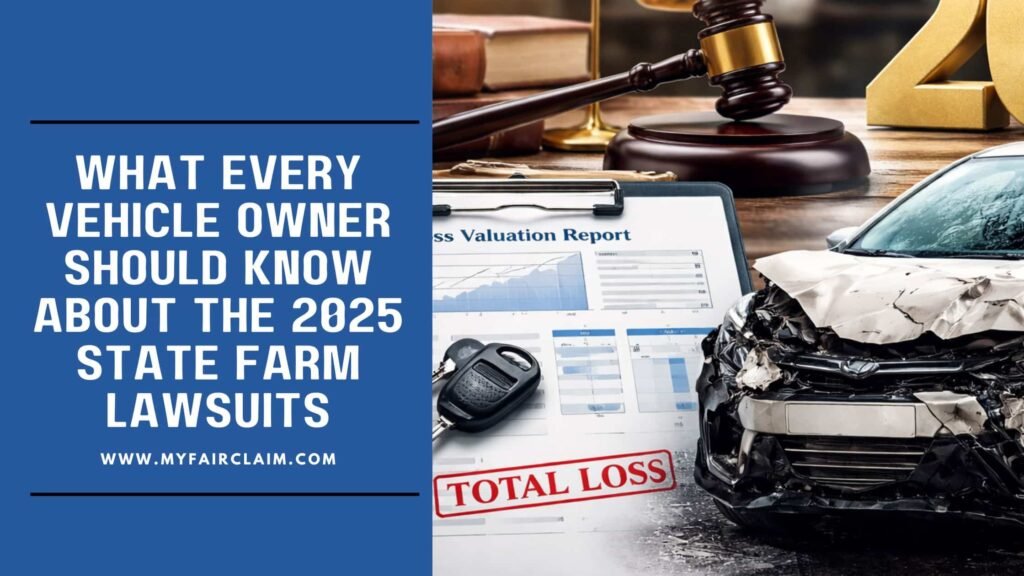
When your vehicle is declared a total loss after an accident, the settlement offer you receive can mean the difference between purchasing a comparable replacement vehicle and being left thousands of dollars short.
For millions of American drivers, that settlement is largely determined by a system most have never heard of: the CCC ONE Market Valuation Report.
In December 2025, this system came under intense legal scrutiny when Alabama plaintiffs filed Goode v. State Farm Mutual Insurance Co. (Case No. 5:25-cv-02102, U.S.
District Court for the Northern District of Alabama), alleging that State Farm’s use of CCC ONE’s proprietary valuation methodology systematically undervalues total loss vehicles in violation of Alabama insurance law.
This isn’t an isolated complaint. Similar lawsuits have been filed across the United States, with North Carolina seeing the Brewer v. State Farm case advance after the U.S. Sixth Circuit Court of Appeals upheld class certification in a related Tennessee case in October 2025.
For vehicle owners navigating total loss claims, understanding how CCC ONE works and where its methodology has been questioned is essential to ensuring fair compensation.
What is CCC ONE?
CCC Information Services Inc. (now CCC Intelligent Solutions) provides the CCC ONE Market Valuation Report, an automated system used by major insurance carriers to determine the actual cash value (ACV) of total loss vehicles.
According to industry sources, CCC maintains contracts with over 300 insurance companies, including State Farm, GEICO, Allstate, Nationwide, Liberty Mutual, Progressive, and USAA.
One certified auto appraiser organization estimates that CCC controls “over 85%” of the total loss valuation market, making it the dominant force in determining how much compensation accident victims receive when their vehicles are deemed total losses.
How CCC ONE Works
When your insurance company declares your vehicle a total loss, they typically input your vehicle’s details into the CCC ONE system, which then:
- Searches for comparable vehicles in your geographic area (typically within a 25-100 mile radius)
- Applies adjustments based on mileage, condition, equipment, and features
- Generates a base vehicle value by averaging the adjusted comparable prices
- Applies condition adjustments that can increase or decrease the base value
- Produces a final actual cash value that becomes the basis for your settlement offer
The final report is typically 3-5 pages and appears comprehensive and professional. However, the devil—as they say is in the details.
The Core Legal Allegations: What the Lawsuits Claim
Alabama Case: Goode v. State Farm (December 2025)
The Alabama lawsuit alleges that State Farm, through its use of CCC ONE, “systematically reduces” the retail cost of comparable vehicles when calculating total loss settlements, in violation of Alabama insurance law, which requires settlements based on the “retail cost of comparable vehicles.”
Key allegations include:
- Automatic price reductions: CCC ONE applies percentage-based deductions to dealer-advertised prices without verifying actual transaction prices
- Lack of transparency: The proprietary methodology makes it impossible for consumers to verify the accuracy of adjustments
- Violation of state law: Alabama law requires using retail costs, not artificially reduced “projected sold prices.”
North Carolina Case: Brewer v. State Farm (October 2025)
The North Carolina lawsuit makes similar claims, alleging that State Farm reduced comparable vehicle values “by as much as 9%” through an automated CCC ONE function that applies uniform deductions regardless of actual market conditions.
The complaint argues this practice violates:
- North Carolina’s Total Loss Regulation
- The Unfair and Deceptive Trade Practices Act (N.C. Gen. Stat. § 75-16)
Multi-State Pattern
These aren’t the only challenges to CCC-based valuations. According to legal reporting, similar class actions have been filed in Alaska, Illinois, Kentucky, Mississippi, Tennessee, and West Virginia.
While some cases have been dismissed, the Tennessee case moved forward in October 2025, suggesting courts are taking these allegations seriously.
Common Methodology Concerns: What Industry Experts Question
Beyond the specific legal allegations, industry professionals and consumer advocates have identified several recurring concerns with CCC ONE’s methodology:
1. The “Take Price” Controversy
CCC ONE doesn’t simply use advertised dealer prices. According to multiple sources, the system applies what it calls “take prices”, theoretically representing the lowest price a dealer would accept for immediate sale.
The problem? Multiple industry sources report that:
- CCC often doesn’t actually contact dealers to verify these “take prices”
- Instead, the system appears to apply automated percentage deductions to advertised prices
- One legal source notes: “It has been stated that CCC often does not actually obtain a ‘take price’ but rather applies a set percent discount to sales prices to get a ‘take price’—an arbitrarily low method.”
A 2019 investigation by WBUR (Boston’s NPR station) found instances where CCC appraisals appeared to include questionable price adjustments without verification.
2. Comparable Vehicle Selection Bias
Florida law, as one example, requires insurers to use “the cost of two or more such comparable vehicles available within the preceding 90 days.” However, consumer advocates have documented cases where:
- Comparables weren’t actually available for purchase when the report was generated
- Lower-priced vehicles were selected despite higher-priced matches being available
- Geographic radius manipulation included lower-price markets while excluding local dealers
One certified appraiser noted: “CCC’s own documents reflect that they determine the fair market value of a vehicle in a ‘backwards’ manner,” and alleged that “CCC only uses the lowest priced comps in determining a vehicle’s actual cash value.”
3. Condition Adjustment Inconsistencies
CCC ONE uses a four-tier condition rating system (Below Average, Average, Above Average, Exceptional). The system then applies dollar-value adjustments based on these ratings across multiple vehicle components:
- Mechanical (engine, transmission)
- Body (sheet metal, trim, paint)
- Interior (upholstery, carpet, dashboard)
- Glass (windshield, windows)
- Tires (tread depth)
Documented concerns include:
- Negative adjustments without inspection: In one documented Massachusetts case, CCC deducted $3,990 from a stolen 2014 Ford Explorer for condition issues, including “numerous leaks” in the transmission and “tears, holes, and/or burn marks” on the seats—despite the vehicle never being recovered for inspection. After the protest, GEICO increased the payout by $2,803.94.
- Minimal credit for recent improvements: One analysis found CCC valued a $2,600 rebuilt engine at only $465 additional value, and four new tires costing $336 added just $24 to the vehicle’s value.
4. The Structural Conflict of Interest
Perhaps the most fundamental concern raised by critics is this: CCC’s customers are insurance companies, not vehicle owners.
As one consumer protection source explains, “CCC works exclusively on behalf of Insurance Companies. Where the companies are motivated to save money and pay no more than what they can, there is a built-in bias.”
An industry analysis notes: “The biggest sales pitch for CCC is that they can save the insurance company money on total loss settlements.”10
This creates what critics describe as a structural incentive to generate lower valuations that favor insurers’ bottom lines rather than consumers’ fair compensation.
What This Means for Your Total Loss Claim
If you receive a CCC ONE valuation, you’re not powerless. Here’s what you need to know:
Your Rights
- You can request the complete report. Most state insurance regulations require insurers to provide the full CCC ONE report upon request—not just the summary page.
- You don’t have to accept the first offer. The initial CCC valuation is an offer to settle, not a final determination of your vehicle’s value.
- You can challenge the methodology. If you find errors, missing equipment, incorrect comparables, or unreasonable adjustments, you have the right to dispute them.
- You may have an appraisal clause. See how the appraisal clause process works and when to invoke it. Many auto insurance policies include provisions allowing you to demand an independent appraisal if you disagree with the insurer’s valuation.
Steps to Challenge a CCC ONE Valuation
Step 1: Obtain the Complete Report
Request the full multi-page CCC ONE report from your adjuster. You need to see:
- All comparable vehicles used
- The specific adjustments applied
- Condition ratings and their dollar values
- Geographic search parameters
Step 2: Verify the Comparables
Research each comparable vehicle listed:
- Is it still available for sale?
- Is the advertised price accurate?
- Does it actually match your vehicle’s specifications?
- Are there closer matches that were excluded?
Step 3: Document Your Vehicle’s Condition
Gather evidence supporting your vehicle’s true condition:
- Maintenance records
- Recent repair receipts
- Pre-accident photos if available
- Any professional inspections
Step 4: Research Market Values
Use independent sources to verify your vehicle’s value:
- NADA Guides
- Kelley Blue Book
- Current dealer listings in your area
- Private party sale listings
Step 5: Submit Your Challenge in Writing
Provide your insurance adjuster with:
- Specific errors you’ve identified
- Documentation of higher comparable values
- Evidence of missing equipment or features
- Proof of superior condition
Step 6: Consider Independent Appraisal
If the insurer refuses reasonable adjustments, hiring a certified independent appraiser ($150-$400 typically) can provide professional documentation supporting your position.
Step 7: Invoke Your Appraisal Clause
If your policy includes an appraisal provision, you can demand that:
- You hire an appraiser
- The insurer hires an appraiser
- The two appraisers select a neutral umpire
- The decision is binding
Industry sources report 70-80% of appraisal clause cases result in higher settlements than the original CCC offer.
Step 8: File a State Insurance Department Complaint
If negotiations fail, file a formal complaint with your state insurance regulator. They can investigate and may compel the insurer to justify their methodology.
The Broader Implications
The current wave of litigation against CCC-based valuations raises important questions about the insurance industry’s increasing reliance on automated systems for claim settlements.
Regulatory Response
The Massachusetts Division of Insurance agreed to investigate allegations that CCC appraisals “often understate car values through sloppiness or fraud” following a 2018 complaint from Source One Financial Corp., a Norwell auto lender.
Other states may follow suit as more consumers and industry participants question whether automated valuation systems adequately protect policyholder interests.
Market Alternatives
While CCC dominates the market, some insurers use alternative valuation methods:
- In-house appraisal systems
- NADA Guides
- Kelley Blue Book
- Independent certified appraisers
However, as one source notes, finding current information about which insurers don’t use CCC ONE can be challenging, as “insurance company practices and policies can change over time.”
What’s at Stake
For individual claimants, the difference between a fair valuation and an undervaluation can be substantial. Industry sources report discrepancies that often range from hundreds to several thousand dollars per vehicle.
When multiplied across millions of total loss claims annually, even small systematic undervaluations can result in billions of dollars in aggregate consumer losses, which explains why class action lawsuits are pursuing industry-wide remedies.
Conclusion – Knowledge is Power in Total Loss Claims
The December 2025 Alabama lawsuit and parallel cases in other states have brought national attention to questions that consumer advocates and auto appraisers have been raising for years: Does CCC ONE’s methodology produce fair market valuations, or does it systematically favor insurance company interests over policyholders?
While courts will ultimately decide the legal merits of these cases, vehicle owners don’t need to wait for judicial resolution to protect their interests.
By understanding how CCC ONE works, knowing your rights, and being prepared to challenge questionable valuations with documentation and independent verification, you can level the playing field in total loss negotiations.
Key takeaways:
- CCC ONE is used by most major insurers to value total loss vehicles
- Multiple lawsuits allege systematic undervaluation through proprietary adjustment methodologies
- You have the right to challenge CCC valuations with evidence and independent appraisals
- Most policies include appraisal clause provisions that can resolve disputes
- State insurance departments can investigate if insurers refuse fair settlements
If you’ve received a CCC ONE valuation that seems unreasonably low, don’t simply accept it. Request the full report, verify the comparables, document your vehicle’s condition, and be prepared to advocate for fair compensation. In total loss claims, the settlement you accept is final; make sure it’s fair before you sign.
Disclaimer: This article is provided for informational and educational purposes only and does not constitute legal advice. The information presented is based on publicly available court documents, news reports, and industry sources, current as of December 24, 2025. Total loss claim outcomes vary based on individual circumstances, policy terms, and state laws. Consult with a qualified attorney or insurance professional for advice specific to your situation.
MyFairClaim is not affiliated with CCC Information Services Inc., State Farm, or any other insurance company mentioned in this article. We are an independent claims assistance service helping vehicle owners navigate the insurance claims process.

Roger Fuentes is trained in vehicle appraisal methodology and serves as Director of Claims Services at MyFairClaim, covering both first-party and third-party diminished value scenarios across all 50 states. His work centers on the intersection of vehicle valuation, insurer settlement practices, and claimant documentation – helping vehicle owners understand what a fair outcome actually looks like and how to pursue it. Roger writes to cut through the jargon that insurers rely on and give claimants a clearer picture of where they stand.