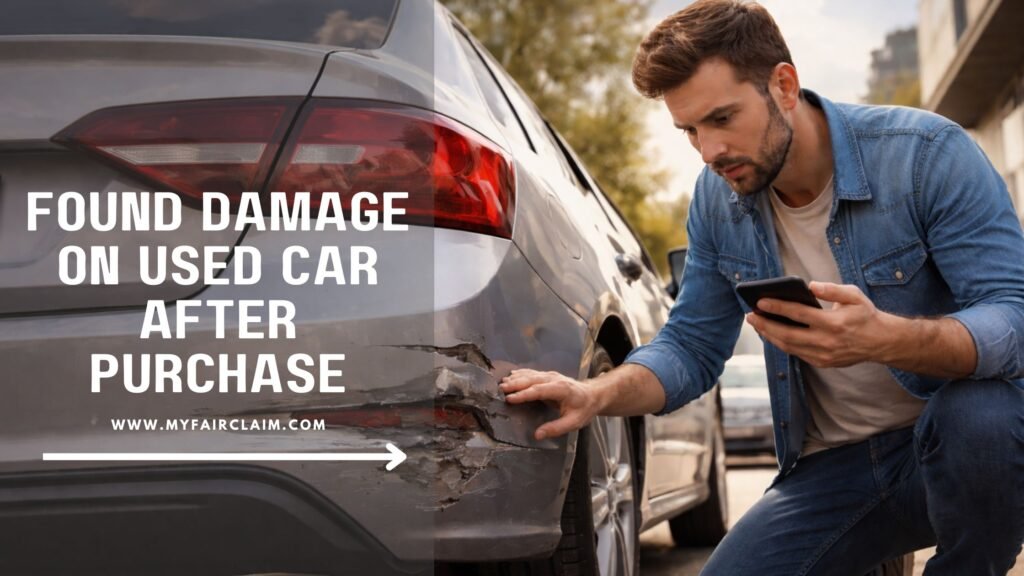
Buying a used car should feel like a smart financial decision. You compare prices, check the mileage, and take a test drive. Everything seems fine. Then days or weeks later, you discover damage that was not obvious at the time of purchase.
Maybe it is frame damage, engine trouble, rust, flood damage, or signs of a previous accident. Finding hidden damage on a used car after purchase can be frustrating and confusing.
You may wonder what your rights are, whether you can return the car, or if the seller is responsible.
If you found damage on a used car after purchase, this guide will explain what it means, what steps to take next, and how it may affect the vehicle’s value.
Why Damage Is Discovered After Buying a Used Car
Damage on a used car is often discovered after purchase because it is not visible during a short inspection or test drive. Many problems do not show immediate symptoms.
Cosmetic damage may be covered with fresh paint. Structural or frame damage may be hidden underneath the vehicle. Engine or transmission problems may only appear after several days of regular driving.
In some cases, prior accidents, flood damage, or major repairs were not disclosed by the seller. When hidden damage surfaces later, it can reduce the car’s safety, performance, reliability, and resale value.
Structural or Frame Damage
Structural or frame damage affects the safety and integrity of the vehicle. Signs may include uneven tire wear, steering misalignment, unusual vibrations, doors that do not close properly, or visible weld marks underneath the car.
Frame damage is serious because it weakens the vehicle’s ability to absorb impact in future collisions. Even if repaired, structural damage can significantly lower market value.
Mechanical Issues
Mechanical defects often appear after the vehicle has been driven for some time. You may notice engine knocking, transmission slipping, overheating, fluid leaks, or warning lights turning on.
These problems may indicate prior neglect, poor maintenance, or incomplete repairs. Mechanical damage can be expensive and may require immediate professional diagnosis to prevent further complications.
Flood Damage
Flood damage is one of the most problematic hidden issues in used cars. Signs include musty odors inside the cabin, rust under seats, corrosion around electrical wiring, malfunctioning electronics, or water stains under carpets.
Flood-damaged vehicles can experience ongoing electrical failures and safety issues. This type of damage drastically reduces resale value and long-term reliability.
Undisclosed Accident Damage
Undisclosed accident damage means the vehicle was involved in a prior collision, but the seller did not inform you. This type of hidden damage is common in used car sales.
You may notice clear signs such as mismatched paint, uneven panel gaps, paint overspray on trim, body filler under the surface, or replacement parts that are not original equipment manufacturer (OEM). These indicators suggest the car was repaired after an accident.
Even if the repairs look professional, a prior accident history lowers buyer trust and reduces resale value. Vehicles with accident records typically sell for less than comparable cars with a clean history.
What To Do Immediately After Discovering Damage
The first step is to review your purchase agreement carefully. Determine whether the vehicle was sold “as-is,” covered under a limited dealer warranty, or protected by any remaining manufacturer warranty. The contract terms will influence your options.
Next, document everything thoroughly. Take clear photos and videos of the damage. Obtain a written inspection report from a certified mechanic and collect repair estimates. Strong documentation strengthens your case.
After gathering evidence, contact the seller immediately. Keep communication professional and preferably in writing.
You may request repair coverage, a partial refund, or possibly a return if policies allow. Dealerships are typically subject to stricter regulations than private sellers.
You should also review the vehicle history using services such as Carfax or AutoCheck. These reports may reveal prior accidents, title branding, or damage that was not disclosed at the time of sale.
Can You Return a Used Car After Purchase?
Returning a used car depends on state law, dealership policy, warranty coverage, and whether fraud occurred.
An “as-is” sale limits certain protections, but it does not protect a seller who intentionally misrepresented the vehicle. If damage was knowingly concealed, legal remedies may be available.
How Found Damage Affects Vehicle Value
Hidden damage reduces a vehicle’s market value by lowering buyer trust and increasing perceived risk. A negative vehicle history record, structural concerns, and visible repairs all decrease resale potential.
In many cases, value can drop between 10% and 30%, depending on severity and type of damage.
Can You File a Diminished Value Claim?
A diminished value claim generally applies when another driver caused an accident and insurance paid for repairs, but the vehicle still loses resale value.
If the damage existed before you purchased the car and was hidden, the issue becomes one of misrepresentation rather than a standard diminished value claim. Legal advice may be necessary in such situations.
Preventing Hidden Damage in Future Purchases
To avoid buying a damaged used car in the future, always schedule a professional pre-purchase inspection.
Carefully review the vehicle history report, inspect the undercarriage, verify VIN numbers on body panels, and avoid rushing the transaction. A small investment in inspection can prevent major financial loss later.
Take Action Before You Lose More Value
If you find damage on a used car after purchase, do not ignore it. Hidden damage can lower resale value and cost you thousands in future repairs. The sooner you act, the better your chances of protecting your investment.
Start by getting a professional inspection and understanding how much value your car has lost. If the damage is linked to a previous accident, you may be eligible to recover the lost value.
Use the Free Diminished Value Calculator by My Fair Claim to estimate your vehicle’s loss in minutes. Get clarity. Know your numbers. Take the next step with confidence.
Key Takeaways
Finding damage on a used car after purchase can feel stressful. It is frustrating to realize the vehicle has hidden problems. But you still have options.
The most important step is to act quickly. Review your purchase agreement, document the damage, and contact the seller as soon as possible.
Understanding your legal rights and knowing how the damage affects resale value will help you make smart decisions. The sooner you respond, the stronger your position will be.
Taking clear and practical steps protects your safety, your money, and your long-term investment.
Keep Reading

Ivan Gustafson works in vehicle appraisal administration at MyFairClaim, with hands-on familiarity in damage assessment documentation, repair estimates, and the appraisal process. His focus is helping vehicle owners understand what appraisers look for – and how to make sure nothing gets overlooked in their claim. Ivan breaks down the appraisal and inspection process in plain language, giving claimants the knowledge they need to ask the right questions and push back when an estimate falls short.