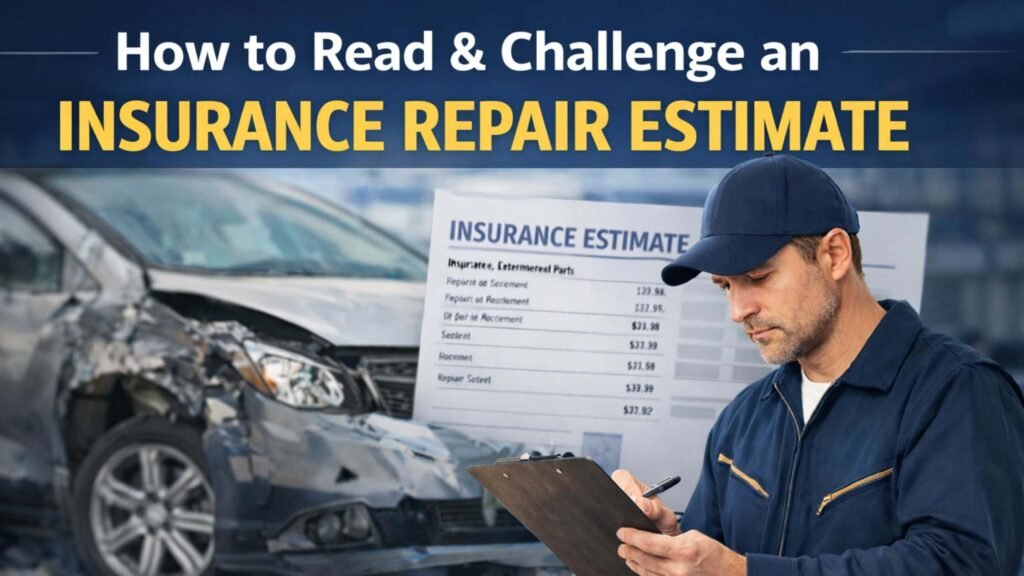
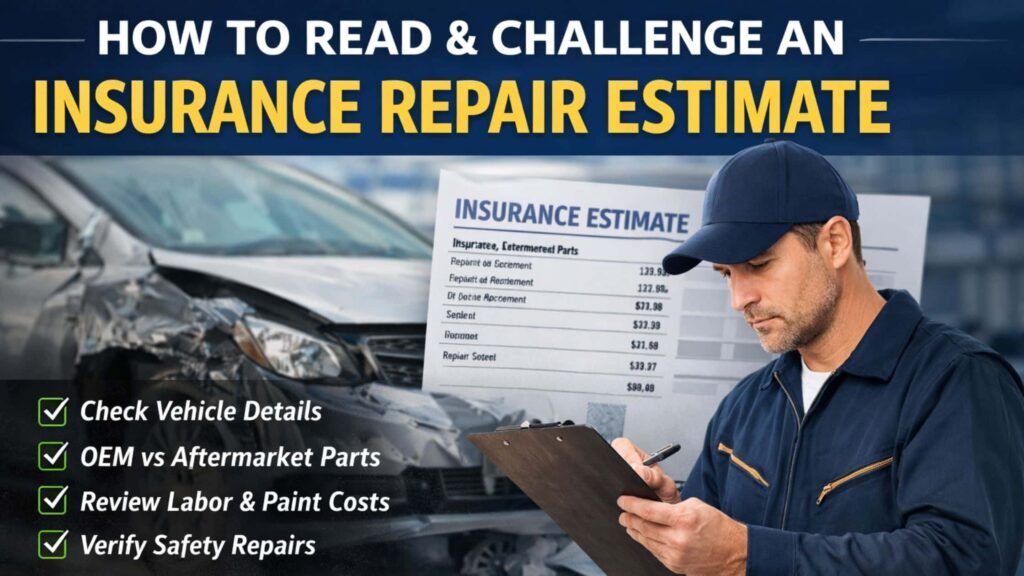
After a car accident, the insurance company provides a repair estimate that outlines the cost to fix your vehicle. To read and challenge an insurance repair estimate, you must verify the vehicle details, check the type of parts listed (OEM vs aftermarket), review labor hours and rates, confirm paint and blend operations, and ensure all safety calibrations and structural repairs are included. If any required procedures are missing or undervalued, you can request clarification, submit a competing body shop estimate, or demand a reinspection.
Insurance estimates are often written to control costs, so reviewing them carefully helps ensure your vehicle is fully and properly repaired.
We are here to help. Let’s break it down in simple terms.
What Is an Insurance Repair Estimate?
An insurance repair estimate is a detailed breakdown of the projected cost to repair your vehicle after an accident. It typically includes the parts required, the number of labor hours assigned to each repair operation, the labor rate used, paint and material costs, applicable taxes, and the total estimated repair amount.
Most insurers prepare these documents using estimating platforms such as CCC, Mitchell, or Audatex. While these systems are standardized, the inputs selected by the adjuster can significantly influence the final payout amount.
What Are the Key Sections of an Insurance Repair Estimate
To read and challenge an insurance repair estimate, review each section carefully to identify missing repairs, safety procedures, incorrect parts, and underpaid labor charges.
1. Vehicle Information Section
The first section includes your vehicle’s year, make, model, VIN, mileage, claim number, and adjuster details. It is critical to verify that the trim level and installed options are accurate.
Features such as advanced driver assistance systems (ADAS), premium lighting, sensors, or factory upgrades can substantially impact repair costs. If these features are missing, the estimate may undervalue the repair.
2. Parts Section: OEM vs Aftermarket vs Used Parts
The parts section identifies what components will be used during repairs. Insurance companies may approve Original Equipment Manufacturer (OEM) parts, which are produced by the vehicle manufacturer. They may also specify aftermarket parts made by third-party companies or LKQ (like kind and quality) used parts sourced from salvage vehicles.
If a newer vehicle is listed with aftermarket or recycled structural parts, that can affect both safety and resale value. Many estimates default to cost-saving parts unless challenged. Reviewing the part type carefully is essential before authorizing repairs.
3. Labor Hours and Labor Rates
Each repair operation is assigned a specific number of labor hours. For example, replacing a bumper may be assigned several hours, while refinishing and painting the panel will have separate time allocations. Insurance companies sometimes reduce labor hours or apply labor rates that are below the prevailing rates in your local market.
If the rate used in the estimate is significantly lower than what certified body shops charge in your area, the estimate may not reflect the true repair cost.
4. Paint and Materials
The paint section should include time for preparation, base coat, clear coat application, and blending adjacent panels to ensure color consistency.
Blending is especially important because modern paint finishes rarely match perfectly without adjusting surrounding panels.
If blending operations are missing from the estimate, your vehicle may show visible paint differences after repair. Insurance estimates frequently exclude blend time unless it is specifically requested by the repair facility.
5. Mechanical and Safety Components
Modern vehicles contain complex electronic and safety systems such as radar sensors, blind spot monitoring, lane departure warning cameras, and forward collision systems. After certain repairs, these systems require diagnostic scanning and recalibration.
If your vehicle is equipped with advanced safety technology and the estimate does not include diagnostic scans or calibration charges, the repair plan may be incomplete.
These procedures are essential to ensure the vehicle functions safely after the accident.
6. Structural and Frame Damage
In cases of moderate to severe impact, structural components may require measuring, straightening, welding, or replacement. A proper structural repair estimate should include frame measurement and any necessary corrective procedures.
If the estimate lists only cosmetic panel repairs but ignores potential structural impact, you should request a reinspection. Hidden structural damage is common and often discovered only after teardown.
Common Insurance Estimate Practices
Insurance companies sometimes issue a preliminary estimate that reflects visible damage only. They may wait for the repair shop to submit supplemental requests after disassembly.
Initial estimates can exclude hidden damage, default to recycled parts, or omit certain procedures that are later negotiated.
The first estimate is often not the final repair cost. Understanding this helps you approach the process strategically rather than accepting the initial number without review.
How to Compare the Insurance Estimate with a Body Shop Estimate
One of the smartest things you can do is get a written estimate from a reputable body shop.
Then compare both documents side by side.
Look for missing items like:
- Diagnostic scans
- Calibrations
- Corrosion protection
- Seam sealer
- Remove-and-install operations
- Blend time
If the body shop’s estimate is higher, it does not automatically mean the shop is overcharging. It may indicate that the insurance estimate was incomplete or overly conservative.
How to Challenge an Insurance Repair Estimate
If you believe the repair estimate is too low, start by requesting a written explanation from the adjuster regarding part selection, excluded procedures, and labor rate calculations.
Ask for clarification on why aftermarket or used parts were approved if your vehicle is relatively new.
You should also submit a competing estimate from a certified repair facility and request a reinspection if additional damage is discovered.
In some states, you may have the right to invoke the appraisal clause in your policy to resolve disputes over repair value.
Professional estimate reviews can further identify underpaid labor, omitted safety procedures, incorrect part usage, and potential diminished value implications.
Signs Your Repair Estimate May Be Too Low
If the total repair cost appears unusually low compared to the severity of the accident, or if no calibration charges are listed for a vehicle equipped with advanced safety systems, the estimate may require further review.
Missing blend time, absent structural repair listings after a significant impact, or resistance from the insurer when you request clarification are additional warning signs.
You are not required to use the insurance company’s preferred repair shop. You have the right to choose your own repair facility.
Why Challenging an Estimate Matters
Accepting an incomplete repair estimate can result in poor-quality repairs, safety concerns, reduced resale value, and potential out-of-pocket costs later. Even when repairs are completed properly, your vehicle may still suffer diminished value due to its accident history.
Ensuring the estimate is accurate protects both your financial interests and your vehicle’s long-term value.
Get a Professional Estimate Review
If you believe your insurance repair estimate may be missing critical repair operations or underpaying necessary procedures, have it professionally reviewed before authorizing repairs.
If you have questions about your accident claim or need assistance disputing a repair estimate, contact our team directly.
Make sure your vehicle is repaired correctly — and your claim is paid fairly.
Helpful Next Steps

Roger Fuentes is trained in vehicle appraisal methodology and serves as Director of Claims Services at MyFairClaim, covering both first-party and third-party diminished value scenarios across all 50 states. His work centers on the intersection of vehicle valuation, insurer settlement practices, and claimant documentation – helping vehicle owners understand what a fair outcome actually looks like and how to pursue it. Roger writes to cut through the jargon that insurers rely on and give claimants a clearer picture of where they stand.