If your leased car was in an accident and later repaired, the car can still lose value. A repaired car with an accident record usually sells for less than a similar car with no accident history. This loss is called diminished value.
Many drivers ask a direct question. Can you claim diminished value on a leased car?
Yes, you may claim diminished value on a leased car, but the leasing company owns the vehicle. Insurers often deny driver-only claims. You usually need the lessor’s approval, as they control the claim and payout, which can affect lease-end charges or buyout price.
How a Lease Changes a Diminished Value Claim
A leased car has a different legal structure. The leasing company owns the car. You pay to use it. This setup changes how insurers view a diminished value claim.
The leasing company faces the resale loss at the end of the lease. You may also face charges if the car returns with an accident record.
Many lease contracts hold the driver responsible for loss in value caused by damage. This responsibility gives you a valid financial interest.
Can a Lessee File a Diminished Value Claim?
You may file a claim if at least one of these conditions applies. Your lease states that you are responsible for loss in vehicle value. You plan to buy the car at the end of the lease.
The at-fault driver’s insurance allows third-party diminished value claims. The leasing company allows you to pursue the claim.
Many lease agreements require the driver to return the car without damage-related value loss. If the car shows an accident history, the driver may owe fees. This risk connects you directly to the financial loss.
What Lease Agreements Usually Say About Damage
Most leases include damage rules. These rules often state that the car must be returned in good condition. They also state that accident history can reduce resale value. The lease may charge the driver for this loss.
Because of these terms, a diminished value claim can protect you from future charges. The legal owner may be the leasing company, but the cost often falls on you.
Who Should File the Claim
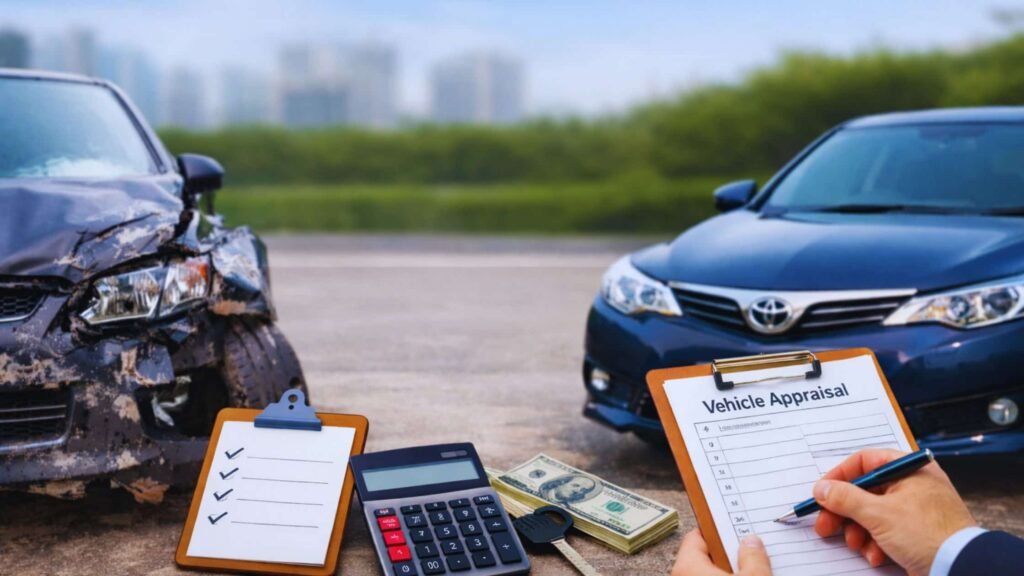
In many cases, the driver files the claim. This happens when the lease assigns value loss responsibility to the driver.
The driver handles the insurance process and gathers documents. The driver may need the lease agreement, repair records, and proof of fault.
Sometimes the leasing company files the claim. This happens when the company keeps full control over claims. Many leasing companies do not act unless the driver requests help. This delay is common.
Claims When You Plan to Buy the Car
A planned buyout strengthens a diminished value claim. If you buy the car, you absorb the value loss yourself. The accident record lowers the car’s true market price. This creates direct financial damage.
Insurers often respond better in this case. Clear proof and a professional appraisal improve results.
Which Insurance Pays the Claim
Most diminished value claims go against the at-fault driver’s liability insurance. Your own collision coverage usually does not pay for value loss.
The leasing company’s policy also rarely pays. Diminished value is a third-party claim tied to fault.
State Rules and Claim Acceptance
Some states accept diminished value claims more often. These states include Georgia, Florida, Texas, North Carolina, and Arizona.
Other states still allow claims but require stronger proof. Local rules affect negotiation, not the basic right to claim.
What You Need to Support the Claim
Strong documentation improves success. You should collect your lease agreement, accident reports, and repair invoices.
You should show proof of fault. You should also obtain a professional diminished value appraisal. Insurers rarely pay without an appraisal.
Why Insurers Deny Leased Car Claims
Insurers often deny these claims with simple statements. They may say you do not own the car. They may say only the leasing company can claim.
They may say no loss exists yet. These statements often aim to delay or reduce payment. They do not always reflect the lease terms or your financial risk.
Claims at the End of the Lease
You can still claim diminished value at lease end. If the leasing company charges you for accident-related value loss, that charge proves direct damage.
This proof can support a claim even if time has passed since the crash.
Key Takeaways
You can claim diminished value on a leased car in many situations. The claim works best when the lease places value loss responsibility on you, when you plan to buy the car, and when the at-fault driver’s insurance accepts third-party claims. Clear records and a professional appraisal increase success.
Leased car claims require care, but they are valid. A clear process helps you protect your money.

Kristen Conners brings over a decade of experience in insurance administration, with deep familiarity in claims processing, policy documentation, and insurer workflows. Her background gives her a practical, consumer-focused perspective on navigating the auto insurance claims process — and a sharp eye for the administrative tactics that can delay or reduce a legitimate payout. Kristen writes to help vehicle owners cut through the complexity of insurance paperwork, understand their rights at every stage of the claims process, and avoid the common mistakes that leave money on the table.