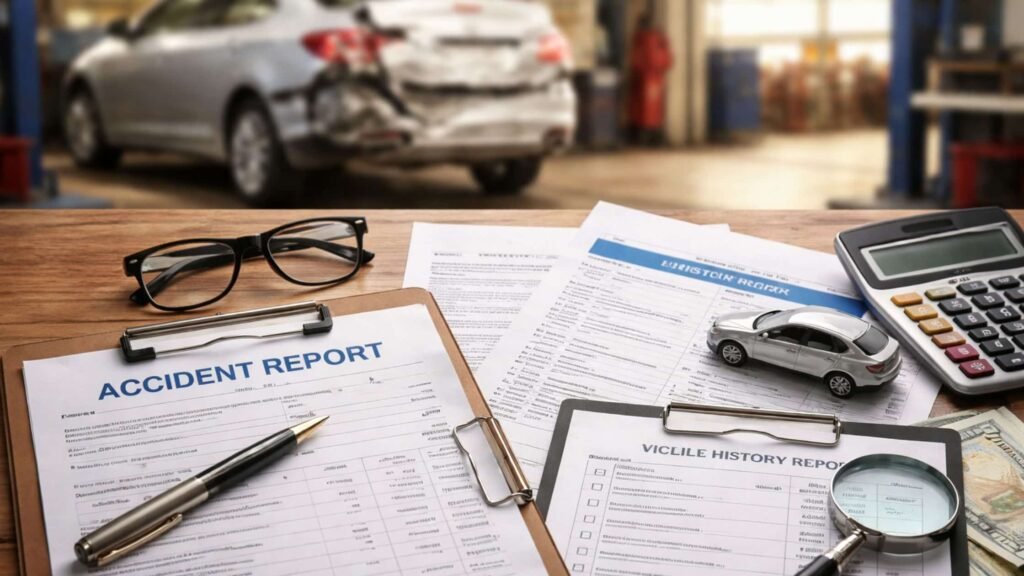
The key to a successful diminished value claim is documentation. Insurance adjusters are trained to minimise payouts. A claim without proper paperwork is easy to reject. A claim backed by complete, organised evidence is significantly harder to dismiss or underpay.
This detailed guide lists every document you need, explains why each one matters, and shows you how to gather and present them effectively.
Why Documentation Is Critical for a Diminished Value Claim
The burden of proof in a diminished value claim rests with you, the vehicle owner. The at-fault insurer will not calculate your loss for you. The insurer’s job is to minimise the settlement. Your job is to prove the loss with evidence.
A complete claim file must answer five questions:
1. Who caused the accident, and when did it happen?
2. What was the vehicle worth before the accident?
3. How severe was the damage?
4. What repairs were completed, and at what cost?
5. By how much has the vehicle’s market value decreased?
Each question corresponds to one or more specific documents. A properly assembled claim file removes the insurer’s ability to plausibly deny any of these facts.
That shifts the conversation from whether you are owed compensation to how much.
Essential Documents for a Diminished Value Claim
| Document | Purpose | Why It Is Important |
| Accident or Police Report | Official record of the accident | Confirms the accident and helps establish fault |
| Insurance Claim Records | Documents from the insurance claim process | Shows the accident was reported and processed |
| Repair Estimates and Invoices | Details of vehicle damage and repairs | Demonstrates the extent of damage and repair work |
| Photos of Vehicle Damage | Visual proof of the accident damage | Supports repair documentation |
| Independent Diminished Value Appraisal | Professional evaluation of value loss | Provides an objective estimate of diminished value |
| Vehicle History Report | Record of accident history | Shows how accident history affects resale value |
| Proof of Pre-Accident Value | Market value before the accident | Establishes the baseline for calculating loss |
| Diminished Value Demand Letter | Formal claim request | Submits the claim with supporting evidence |
What Are the Documents You Need for a Diminished Value Claim?
Below is every document you should collect before submitting your claim to the at-fault insurance company.
1. Accident or Police Report
An accident report or police report is one of the most important documents for a diminished value claim. This report provides an official record of the accident and helps verify the details of the incident.
The report usually includes information such as the date and location of the accident, details of the drivers and vehicles involved, insurance information, and statements from witnesses. In many cases, it also identifies which driver was responsible for the accident.
Because diminished value claims are typically filed against the at-fault driver’s insurance company, this document helps establish liability and confirms the circumstances of the accident.
2. Insurance Claim Records
Insurance claim records are another key document required for a diminished value claim. These records confirm that the accident was reported to the insurance company and that the damage was processed through the insurance claim system.
Insurance claim documentation may include the claim number, claim summary, adjuster notes, repair estimates approved by the insurer, and communication between the vehicle owner and the insurance company.
These documents help demonstrate that the accident caused damage significant enough to require repairs and that the insurer was involved in evaluating the damage.
3. Repair Records and Final Repair Invoice
All documentation from the repair facility — including the original estimate, any supplemental estimates, and the final itemised invoice.
Repair records document the exact scope of damage. They list every component repaired or replaced, the repair method used, and the total cost. Appraisers and insurers use repair cost as a primary input when calculating diminished value.
Structural or frame repairs carry the highest weight. A vehicle with documented frame damage will have a substantially larger diminished value loss than one with only cosmetic damage.
Key items to collect:
- The original repair estimate from the auto body shop.
- Any supplemental or revised estimates issued during the repair.
- The final itemised invoice listing all parts, labour, and materials.
- Specific documentation of any frame, structural, or airbag repairs.
4. Photos of the Vehicle Damage
Photos taken after the accident provide visual evidence of the damage. Photographs are irreplaceable. Once repairs are complete, the physical evidence is gone. Photos document damage severity, support your repair records, and counter any insurer argument that the damage was pre-existing or minor.
What to capture:
- Wide-angle views of all four sides of the vehicle.
- Close-up shots of every damaged panel, component, or structural element.
- The other driver’s vehicle, showing the point of impact.
- Undercarriage or frame damage, if safe to photograph.
- In-progress photos taken during the repair process.
- Final photos of the completed repairs.
5. Professional Diminished Value Appraisal Report
USPAP stands for Uniform Standards of Professional Appraisal Practice — the national standard for appraisal methodology in the United States.
This is the most important document in your claim file. A diminished value claim without a professional appraisal is an opinion.
A USPAP-compliant appraisal is evidence. It documents your vehicle’s pre-accident value, the appraiser’s methodology, comparable market sales data, and the calculated diminished value — in a format that is legally defensible and difficult for an insurer to dismiss.
What a quality appraisal report must include:
- Appraiser credentials, license number, and USPAP compliance declaration.
- Vehicle identification (VIN, year, make, model, mileage, trim level).
- Pre-accident condition assessment and baseline market value.
- Analysis of damage severity and repair quality.
- Comparable vehicle sales data — accident-history vehicles versus clean-title vehicles.
- The valuation methodology used (e.g., market comparison approach, 17c formula).
- The final calculated diminished value with supporting rationale.
MyFairClaim provides USPAP-compliant appraisal reports starting at $49.99. Reports are available at three service levels, from a foundational Essential Report to a full-service Premium Report that includes negotiation support and dispute assistance.
6. Vehicle History Report (CARFAX or AutoCheck)
A vehicle history report is another document that can support a diminished value claim. Reports from providers such as Carfax or AutoCheck record accident history and repair records.
Once an accident appears on a vehicle history report, it becomes visible to potential buyers and dealerships. Even if the vehicle is repaired correctly, many buyers are less willing to pay full market value for a car that has an accident record.
Because these reports influence buyer decisions, they help demonstrate why a vehicle may lose value after an accident.
7. Proof of the Vehicle’s Pre-Accident Value
To calculate diminished value, it is necessary to determine the vehicle’s market value before the accident occurred. This value serves as the baseline for measuring the loss caused by the accident.
Vehicle valuation tools, dealer appraisals, and listings of similar vehicles in the market can help establish the pre-accident value. Maintenance records can also support this value by showing that the vehicle was in good condition before the accident.
Providing proof of the vehicle’s pre-accident value helps the insurance company calculate the difference between the vehicle’s original value and its value after repairs.
8. Diminished Value Demand Letter
A diminished value demand letter is used to formally request compensation from the at-fault driver’s insurance company. The letter explains the accident details, describes the repairs performed, and states the amount being requested for the vehicle’s loss in value.
The demand letter usually includes supporting documents such as the accident report, repair invoices, photographs, appraisal report, and vehicle valuation information. By presenting all the evidence together, the demand letter helps the insurance company review the claim and determine the appropriate settlement.
A clear and well-organized demand letter can significantly improve the chances of receiving compensation.
How MyFairClaim Helps You Build a Complete Claim File
Gathering and organising every required document takes time. One missing item can derail the entire claim. MyFairClaim removes that risk by providing the most important document in your file — the professional appraisal — alongside the supporting tools you need to negotiate effectively.
Essential Report ($49.99) — A USPAP-compliant appraisal report with a market value estimate. This is the core document every diminished value claim requires.
Professional Report ($149.99) — Everything in the Essential tier, plus vehicle history and price trend analysis, a personalised demand letter, negotiation tips, and filing instructions with email support.
Premium Report ($249.99) — Full-service advocacy. Includes everything in the Professional tier, plus strategic response support, dispute guidance, and appeals assistance if the insurer rejects or underpays your claim.
MyFairClaim appraisers have decades of combined experience in insurance and automotive valuation. They know how insurers evaluate documentation and how to present a claim in a way that is clear, credible, and difficult to dispute.
Not sure where to start? Use the free MyFairClaim Diminished Value Calculator for an instant estimate of your loss in under two minutes — no purchase required.
Conclusion
A diminished value claim is a legal right. Exercising that right successfully requires documentation. The police report establishes fault. The repair invoice proves the extent of damage. The vehicle history report shows the permanent record attached to your car. The professional appraisal quantifies the exact dollar loss. The demand letter triggers the negotiation.
Every document in this list has a purpose. Together, they build a claim the insurance company cannot easily ignore or dismiss. Remove any one of them, and you give the adjuster room to push back.
Start by collecting the eight Essential documents listed above. Commission a professional USPAP-compliant appraisal. Submit a formal demand letter with a specific dollar amount and a response deadline.
If you need help, MyFairClaim is ready — with reports starting at $49.99 and a free calculator to give you a starting estimate in minutes.

Roger Fuentes is a certified vehicle appraiser and Director of Claims Services at MyFairClaim. With over 15 years of experience specializing in both first-party and third-party diminished value claims, Roger has successfully processed more than 2,000 claims nationwide, achieving a 94% settlement success rate.