
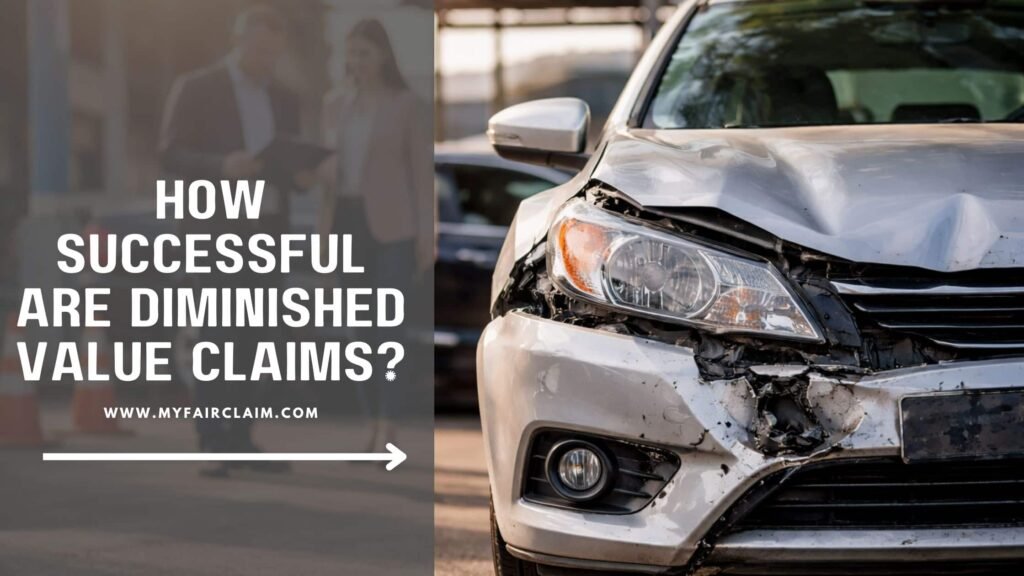
A diminished value claim allows a vehicle owner to request compensation for this loss from the at-fault driver’s insurance company. Many car owners wonder whether these claims are actually successful and if they are worth pursuing.
The truth is that diminished value claims can be successful when they are properly documented and filed correctly.
The success of the claim depends on several factors, such as the vehicle’s age, the severity of the accident damage, and the evidence provided to the insurance company.
Are Diminished Value Claims Successful?
Diminished value claims are often successful when the claim is supported with strong evidence and proper documentation.
Many claims are settled through negotiations with insurance companies rather than through legal action. When a vehicle owner submits repair records, accident details, and an independent appraisal report, the chances of receiving compensation increase significantly.
The amount recovered can vary depending on the vehicle and the damage involved. Some vehicle owners recover a few hundred dollars, while others receive several thousand dollars for the loss in resale value.
Overall, diminished value claims have a good chance of success when the accident was not the owner’s fault, and the vehicle experienced significant damage.
What Are the Key Factors That Affect the Success of a Diminished Value Claim?
Several factors influence whether a diminished value claim will succeed and how much compensation may be paid.
1. Vehicle Age
The age of the vehicle is one of the most important factors. Newer vehicles usually experience greater loss in resale value after an accident because buyers expect them to have a clean history.
As vehicles become older, their market value naturally decreases, which can reduce the amount of diminished value.
2. Severity of Damage
The level of damage caused by the accident also plays a major role. Vehicles that suffer structural damage, frame damage, or major body repairs often experience significant value loss.
On the other hand, minor cosmetic damage may not reduce the vehicle’s resale value enough to justify a large diminished value claim.
3. Fault in the Accident
In most cases, diminished value claims are filed against the at-fault driver’s liability insurance. If the vehicle owner caused the accident, insurance companies usually do not pay diminished value under the owner’s own collision coverage unless specific state laws require it.
4. State Laws
State regulations can influence whether diminished value claims are allowed and how they are handled. Some states provide stronger rights for vehicle owners to recover diminished value, while others limit when these claims can be filed.
Understanding the laws in the state where the accident occurred can help determine whether the claim is likely to succeed.
5. Insurance Company Practices
Insurance companies sometimes attempt to minimize diminished value payments. They may argue that the repairs restored the vehicle completely or that the loss in value is minimal.
In some cases, insurers use internal formulas to calculate diminished value, which may produce lower estimates than independent appraisals. Because of this, many successful claims involve negotiation and strong supporting evidence.
How to Increase the Chances of a Successful Diminished Value Claim
The success of a diminished value claim depends on proper documentation and a clear claim process.
When vehicle owners provide accurate evidence and follow the correct steps, insurance companies are more likely to evaluate the claim fairly.
1. Obtain a Professional Diminished Value Appraisal
A professional diminished value appraisal helps determine how much value the vehicle lost after the accident. An independent appraiser compares the vehicle’s value before the accident with its value after repairs.
This report provides objective data that can support the claim during negotiations with the insurance company.
2. Keep Repair Records and Documents
Complete repair documentation helps prove the extent of the accident damage and the repairs performed. Important documents include repair invoices, repair estimates, accident photos, and insurance claim records. These records help show that the vehicle’s market value may have been affected.
3. File the Claim After Repairs
A diminished value claim is usually filed after the vehicle repairs are completed. At that point, the vehicle’s post-repair market value can be evaluated.
Filing the claim soon after repairs also helps ensure it is submitted within the legal time limit set by state law.
4. Send a Diminished Value Demand Letter
A demand letter formally requests compensation from the at-fault driver’s insurance company. The letter should include accident details, repair documentation, and the diminished value appraisal report.
Clear documentation helps the insurer review the claim and determine compensation.
Why Insurance Companies Sometimes Deny These Claims
Insurance companies do not always approve diminished value claims easily. In some cases, insurers argue that the repairs fully restored the vehicle’s condition and that the market value has not been significantly affected.
Another common reason is the use of internal formulas, such as the 17c formula, which often calculates a lower diminished value than independent appraisals.
Because of these practices, vehicle owners may need to negotiate with the insurance company to receive fair compensation.
Providing strong documentation and professional appraisal reports can help challenge low settlement offers.
Average Diminished Value Settlement Amount
The amount recovered from a diminished value claim depends on several factors, including the vehicle’s make and model, the severity of the accident damage, and the vehicle’s age.
Vehicles that are newer or more expensive often experience larger value losses. In many situations, moderate accident damage may result in compensation ranging from several hundred to a few thousand dollars.
For newer vehicles, luxury cars, or vehicles with structural damage, the diminished value may be significantly higher.
When a Diminished Value Claim May Be Denied
Although many diminished value claims succeed, some situations make approval less likely.
Claims involving very old vehicles often receive lower compensation because the market value is already reduced. Accidents that cause only minor cosmetic damage may also result in little or no diminished value.
Claims may also be denied if the vehicle owner was responsible for the accident, if the vehicle already had multiple accident records, or if the claim lacks sufficient documentation.
How Professional Services Can Help
Many vehicle owners find it difficult to calculate diminished value or negotiate with insurance companies. Professional diminished value appraisal services can help by providing independent valuation reports and claim documentation.
These reports help demonstrate the true loss in market value and can strengthen negotiations with insurers.
Companies such as MyFairClaim assist vehicle owners by preparing professional diminished value appraisal reports and supporting their claims with credible valuation data.
Need Help Calculating Your Vehicle’s Diminished Value?
If your car was involved in an accident, its resale value may have decreased even after repairs.
MyFairClaim provides professional diminished value appraisal reports that help vehicle owners support their insurance claims and pursue fair compensation for their vehicle’s lost value.
Key Takeaways
Diminished value claims can be successful when the claim is supported by proper documentation, strong evidence, and a professional appraisal.
Although insurance companies may initially resist these claims, many vehicle owners recover meaningful compensation for the loss in their vehicle’s resale value.
If your vehicle was damaged in an accident that was not your fault, filing a diminished value claim can help you recover the financial loss caused by the accident history.

Kristen Conners brings over a decade of experience in insurance administration, with deep familiarity in claims processing, policy documentation, and insurer workflows. Her background gives her a practical, consumer-focused perspective on navigating the auto insurance claims process — and a sharp eye for the administrative tactics that can delay or reduce a legitimate payout. Kristen writes to help vehicle owners cut through the complexity of insurance paperwork, understand their rights at every stage of the claims process, and avoid the common mistakes that leave money on the table.