
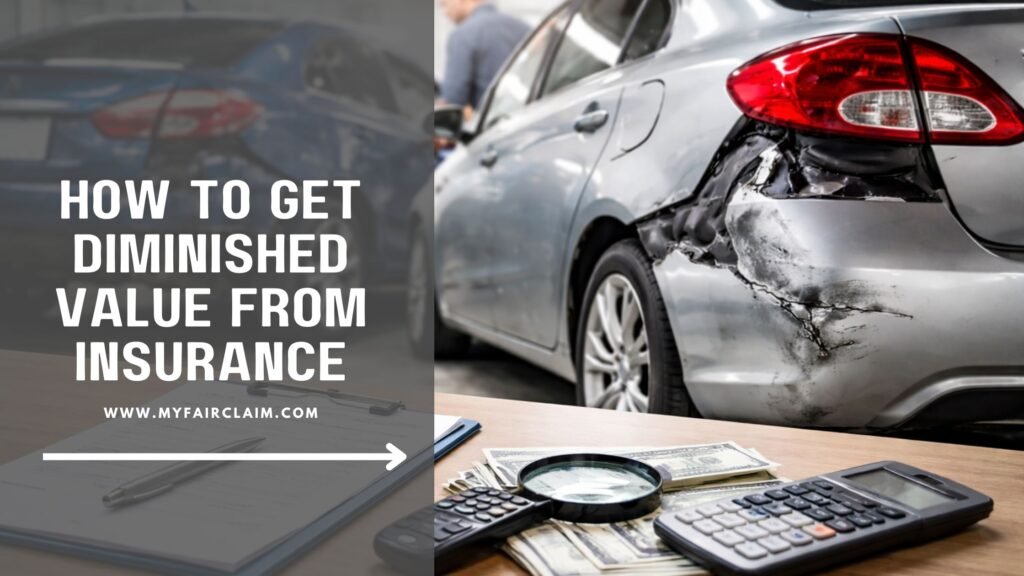
When a car is involved in an accident, its market value usually decreases even after repairs are completed. This happens because accident history appears in vehicle reports, making the car less attractive to future buyers.
If another driver caused the accident, you may be able to claim Diminished Value from their insurance company.
In this guide, you will learn the steps to successfully recover your vehicle’s lost value.
When You Can Claim Diminished Value from Insurance
Not every accident automatically qualifies for a diminished value claim. Most successful claims occur under the following conditions:
- Another driver was at fault for the accident
- The claim is filed against the at-fault driver’s insurance
- The vehicle is relatively new or high-value
- The damage required major repairs
- The accident appears on vehicle history reports such as Carfax or AutoCheck
Many insurance companies do not voluntarily offer diminished value payments, which means you usually have to request and negotiate the claim yourself.
Step-by-Step Guide to Getting Diminished Value from Insurance
1. Confirm the Other Driver Was at Fault
Diminished value claims are typically filed against the at-fault driver’s insurance policy. Make sure the accident report clearly shows liability.
If you were responsible for the accident, most insurers will not pay diminished value unless your policy specifically includes it.
2. Gather Important Documentation
Proper documentation strengthens your claim and helps prove the loss in value.
Important documents include:
- Police accident report
- Insurance claim details
- Repair invoices and estimates
- Photos of the damage
- Vehicle history report
- Maintenance records
These records help establish the vehicle’s condition before and after the accident.
3. Determine the Vehicle’s Pre-Accident Value
Next, determine what your vehicle was worth before the accident. You can estimate this value using:
- Kelley Blue Book
- NADA vehicle values
- Local dealership pricing
- Market listings for similar vehicles
This value acts as the baseline for calculating the diminished value.
4. Get a Professional Diminished Value Appraisal
Insurance companies often dispute the amount claimed. To support your case, many vehicle owners obtain a professional diminished value appraisal.
A certified auto appraiser will evaluate factors such as:
- Vehicle age and mileage
- Accident severity
- Repair quality
- Market demand
- Structural damage
The appraiser then produces a report estimating how much value the vehicle has lost.
5. Submit a Diminished Value Claim
Once you have documentation and an appraisal report, submit a formal diminished value claim to the at-fault driver’s insurance company. Your claim should include:
- Your contact details
- Accident information
- Repair documentation
- Appraisal report
- Requested compensation amount
This request is typically submitted as a diminished value demand letter.
6. Negotiate with the Insurance Company
Insurance companies frequently respond with lower settlement offers or may initially deny the claim.
During negotiation:
- Provide supporting evidence
- Reference your appraisal report
- Highlight the vehicle’s reduced resale value
- Request justification for any reduced offer
Persistence is often necessary to receive fair compensation.
7. Consider Legal Action if Necessary
If the insurance company refuses to pay a reasonable amount, you may consider:
- Filing a complaint with your state insurance regulator
- Consulting a diminished value attorney
- Filing a small claims lawsuit
In many cases, insurance companies settle once they see strong documentation and a willingness to pursue legal options.
What Are the Factors That Affect Diminished Value?
Several factors influence how much diminished value your vehicle loses after an accident.
1. Vehicle Age
Newer vehicles typically experience higher diminished value losses because buyers expect them to have a clean history.
2. Mileage
Lower-mileage vehicles often lose more value compared to older high-mileage vehicles.
3. Accident Severity
Structural damage, frame damage, or airbag deployment can significantly increase diminished value.
5. Vehicle Brand and Market Demand
Luxury cars and high-end vehicles often suffer larger diminished value losses.
States Where Diminished Value Claims Are Common
Diminished value laws vary by location, but claims are most common in states such as:
- Georgia
- Florida
- Texas
- California
- North Carolina
Some states allow first-party diminished value claims, while others only allow claims against the at-fault driver.
What Are the Tips to Maximize Your Diminished Value Settlement?
If you want to improve your chances of getting a higher payout, follow these tips:
1. Act quickly – Some states have time limits for filing diminished value claims.
2. Document everything – Detailed records strengthen your case.
3. Get an independent appraisal – Third-party reports add credibility.
4. Avoid accepting the first offer – Initial insurance offers are often low.
5. Use a demand letter – A structured claim request improves negotiation.
What are the Common Mistakes to Avoid?
Many vehicle owners miss out on diminished value compensation due to simple mistakes. One common error is delaying the claim, which can weaken your case or exceed legal deadlines.
Another mistake is accepting the insurance company’s first offer too quickly, as initial settlements are often lower than the actual loss in value.
Some drivers also skip getting a professional diminished value appraisal, making it harder to prove how much the vehicle’s value has dropped.
In addition, failing to research the vehicle’s pre-accident market value or submitting incomplete documentation can reduce the chances of a successful claim. Keeping proper records and supporting evidence is essential for securing fair compensation.
Get Help With Your Diminished Value Claim
If your vehicle was involved in an accident and may have lost value, MyFairClaim can help. Our tools and resources make it easier to estimate your vehicle’s diminished value and understand how much compensation you may be entitled to claim from the insurance company.
Start by using the MyFairClaim diminished value calculator or explore our expert guides to take the first step toward recovering the value your vehicle lost after the accident.
Key Takeaways
Diminished value claims help vehicle owners recover the loss in resale value after an accident. Even with quality repairs, cars with an accident history usually sell for less.
To get diminished value from insurance, document the accident, keep repair records, obtain a professional appraisal, and submit a clear claim to the at-fault driver’s insurance company. Taking these steps can help you recover a significant portion of your vehicle’s lost market value.

James Andrews serves as Senior Claims Specialist at MyFairClaim, focusing on denial reversals and complex diminished value cases. With over 12 years of battling insurance company denials, he has developed strategies that overturn 73% of initial rejections. His expertise in turning “hopeless” denials into successful recoveries has helped thousands recover money insurance companies insisted didn’t exist.