

After a car accident, dealing with an insurance adjuster can be frustrating, especially when their assessment doesn’t match your expectations.
If you disagree with a car insurance adjuster’s decision on repair costs, vehicle value, fault determination, or settlement amount, you are not required to accept it.
Our detailed guide explains exactly what to do if you disagree with a car insurance adjuster, your rights as a policyholder or claimant, and how to strengthen your case for a fair outcome.
Why Disagreements With Insurance Adjusters Happen
Disagreements with car insurance adjusters often arise because adjusters are tasked with settling claims quickly while minimizing payouts for the insurance company.
This can result in low repair estimates that do not account for all damages, disputes over who was at fault for the accident, or vehicle valuations that are based on limited or inaccurate market data.
In many cases, adjusters may overlook diminished value after an accident, insist on using aftermarket or recycled parts instead of OEM components, or deny certain aspects of coverage altogether.
These situations commonly leave vehicle owners feeling that the settlement offer does not reflect the true loss they have suffered.
What Can You Do If You Disagree With a Car Insurance Adjuster?
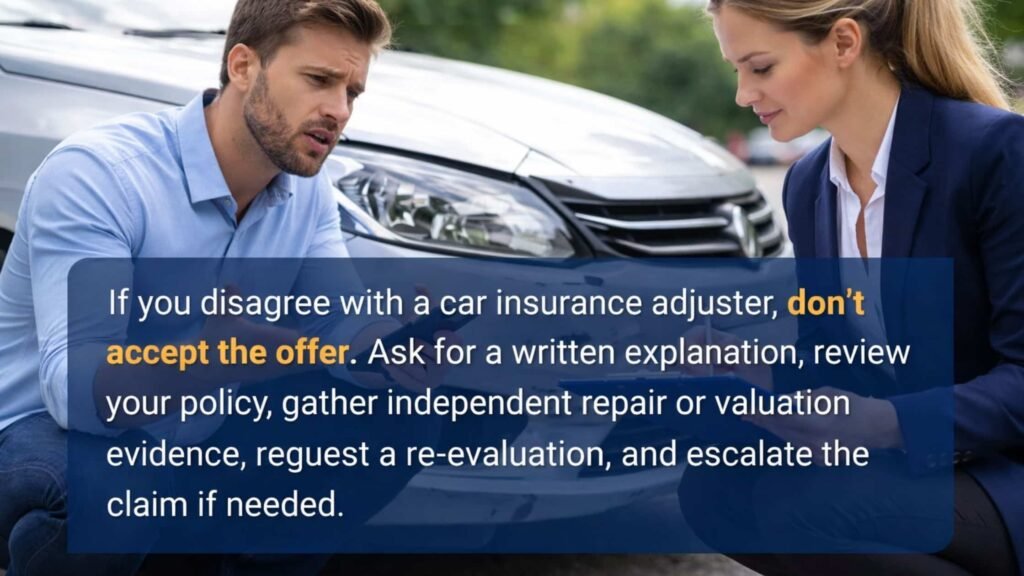
If you disagree with a car insurance adjuster, don’t accept the offer. Ask for a written explanation, review your policy, gather independent repair or valuation evidence, request a re-evaluation, and escalate the claim if needed.
Step 1: Ask for a Detailed Explanation in Writing
If you disagree with a car insurance adjuster’s decision, the first step is to request a detailed explanation in writing.
This written response should clearly outline how the settlement amount was calculated, which valuation tools or repair estimating systems were used, and what comparable vehicle listings or data supported their conclusion.
It should also reference the specific policy clauses that justify the decision. Having this information in writing not only creates an official record but also helps you identify calculation errors, missing damages, or assumptions that can be challenged with evidence.
Step 2: Review Your Insurance Policy Carefully
Before disputing an adjuster’s assessment, it is essential to carefully review your insurance policy.
Pay close attention to coverage limits, repair standards such as OEM versus aftermarket parts, and any clauses related to appraisals or dispute resolution.
Some policies also specify whether diminished value claims are allowed. If the adjuster’s decision contradicts the language in your policy, this discrepancy can serve as a strong foundation for contesting the settlement.
Step 3: Gather Independent Evidence
Successfully disputing an insurance adjuster’s decision requires strong, independent evidence. For repair-related disagreements, this may include written estimates from certified auto repair shops, photographs of hidden or supplemental damage, and manufacturer repair guidelines that support more extensive repairs.
If the dispute involves a total loss or a low settlement offer, you can gather comparable vehicle listings from your local market, independent valuation reports, and documentation of recent upgrades or maintenance.
In cases involving diminished value, a professional diminished value appraisal that compares the vehicle’s market value before and after the accident can significantly strengthen your claim.
Step 4: Request a Re-Evaluation or Supervisor Review
When an adjuster refuses to reconsider their decision despite supporting evidence, you can formally request a re-evaluation or ask that the claim be escalated to a supervisor or senior adjuster.
Communicating professionally and referencing documented evidence often leads to a more objective review.
In many cases, escalation alone results in a revised settlement offer, as supervisors tend to take a broader and more balanced approach to claim evaluations.
Step 5: Use the Appraisal Clause if Available
Many auto insurance policies include an appraisal clause that allows both the insurer and the claimant to hire independent appraisers when there is a dispute over vehicle value.
If the two appraisers cannot agree, a neutral umpire is selected to make a binding decision. This process is particularly effective for disagreements involving total loss valuations, high-value vehicles, or diminished value claims.
Although there may be some costs involved, the appraisal process often leads to a more accurate and fair settlement.
Step 6: File a Complaint With the State Insurance Department
If negotiations reach a dead end or you believe the insurer is handling your claim unfairly, you have the option to file a complaint with your state’s department of insurance.
While this step does not guarantee an immediate settlement, it requires the insurance company to formally respond and places regulatory scrutiny on their actions.
Insurance companies generally take such complaints seriously, especially when there is evidence of unreasonable delays or unfair claim practices.
Step 7: Consider Professional Help
When the financial impact of a claim is significant, seeking professional assistance may be the most effective option.
Independent auto appraisers can provide unbiased valuations, public adjusters can help negotiate on your behalf, and attorneys can step in if there is evidence of bad faith or major financial loss.
For diminished value disputes in particular, a certified appraisal is often the most effective way to overturn a low or denied claim and secure proper compensation.
Common Mistakes to Avoid When Disputing an Adjuster
Many claimants weaken their position by making avoidable mistakes during the dispute process. Accepting the first settlement offer without reviewing it carefully can result in significant financial loss.
Emotional arguments, rather than evidence-based communication, often lead to stalled negotiations.
Missing deadlines for appeals or appraisal requests can eliminate your right to dispute altogether.
Relying solely on generic online car value tools instead of professional valuations can also undermine your claim.
Additionally, failing to document conversations and agreements in writing can make it difficult to challenge inaccuracies later.
Frequently Asked Questions (FAQs)
Q. Can I refuse an insurance adjuster’s offer?
Yes. You are not required to accept any settlement you believe is unfair.
Q. How long does an insurance dispute take?
It can take anywhere from a few days to several weeks, depending on evidence, escalation, and policy terms.
Q. Will disputing a claim delay payment?
Possibly, but accepting an unfair settlement costs far more in the long run.
Q. Can I negotiate with the adjuster?
Absolutely. Insurance claims are negotiable, especially when supported by documentation.
Take Action Before You Accept a Low Settlement
If you disagree with a car insurance adjuster, don’t rush into accepting an unfair offer. Once a settlement is finalized, you may lose the ability to recover the full value of your loss.
At MyFairClaim, we help vehicle owners challenge inaccurate insurance valuations with independent, data-backed appraisals.
Whether your claim involves a low settlement, total loss dispute, or diminished value after an accident, our experts ensure your vehicle is evaluated fairly, not based on insurance shortcuts.

Roger Fuentes is a certified vehicle appraiser and Director of Claims Services at MyFairClaim. With over 15 years of experience specializing in both first-party and third-party diminished value claims, Roger has successfully processed more than 2,000 claims nationwide, achieving a 94% settlement success rate.
