
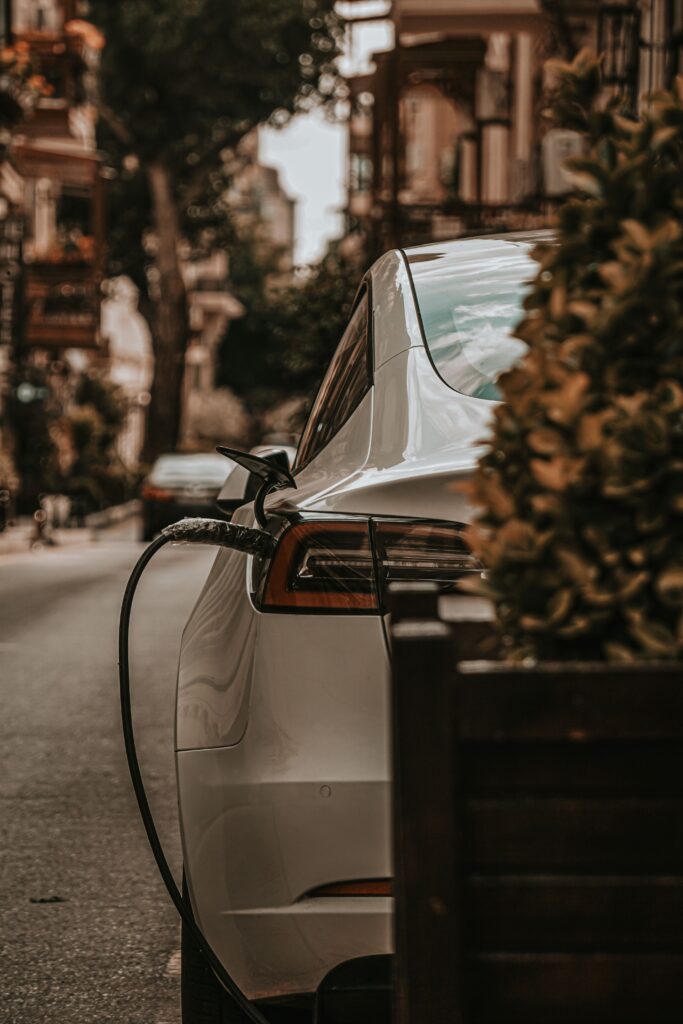
Tesla diminished value losses hit harder than most owners expect — and harder than insurers want to admit.
EV buyers are especially sensitive to accident history. Battery concerns, ADAS recalibration questions, and the general expectation that an EV should be in pristine condition all compound the stigma that follows any accident-history vehicle. If another driver hit your Tesla, Rivian, or Lucid and you haven’t filed a diminished value claim, you’re absorbing a loss that belongs to their insurer.
Here’s what you need to know before filing.
Why Tesla Diminished Value Losses Run Higher Than Other Vehicles
The standard dynamics of diminished value — accident history reduces buyer confidence, which reduces resale price — apply to every vehicle. But several factors specific to EVs amplify the loss.
Battery uncertainty. An EV’s battery pack is its most expensive component and the one buyers worry about most after a collision. Even a minor rear-end impact raises questions about whether the battery enclosure was compromised. Buyers and dealers can’t inspect a battery pack the way they can inspect a repaired quarter panel. That uncertainty gets priced into their offer — every time.
ADAS recalibration. Tesla’s Autopilot cameras, sensors, and radar are integrated throughout the body. Any significant impact requiring panel or structural repair typically requires full ADAS recalibration. If the repair shop didn’t document this recalibration — or didn’t do it — buyers have legitimate grounds to worry about safety system accuracy. A well-documented recalibration helps; an undocumented one hurts your claim.
Higher base value. EVs cost more than comparable gas vehicles. A 2023 Tesla Model 3 Long Range is worth more than a 2023 Toyota Camry. Higher base value means higher absolute diminished value loss even at the same percentage. A 15% resale stigma on a $45,000 Tesla is $6,750. The same percentage on a $28,000 Camry is $4,200.
Thinner comparable data. Insurance adjusters love to undervalue EV claims by claiming there isn’t enough comparable sales data to establish market loss. This is increasingly false as EV market share grows, but it’s still a tactic. A professional appraisal that pulls actual EV-specific comps defeats this argument directly.
Why the 17c Formula Fails on EVs
Most insurers calculate diminished value using the 17c formula — a methodology that came out of the Mabry v. State Farm case in Georgia and has been applied industry-wide ever since. The formula works like this: take 10% of the vehicle’s pre-accident book value, apply a damage multiplier, apply a mileage multiplier, and that’s your diminished value.
For EVs, this produces a number that consistently undervalues the actual market loss.
The 17c formula uses book value, not market comparables. For Teslas specifically, book value tools like KBB and NADA have historically lagged actual transaction prices because EV resale markets move faster than the databases update. Using a stale book value as your baseline means your 10% starting point is already artificially low.
The formula also doesn’t account for battery-related stigma, ADAS recalibration history, or the EV-specific buyer psychology that drives deeper discounts after accidents. It treats a Tesla Model Y the same as a Honda CR-V. The market doesn’t.
When an insurer hands you a 17c-based offer on your EV, that offer is almost certainly the floor, not a fair number.
What a Strong EV Diminished Value Claim Looks Like
The documentation that wins an EV diminished value claim is the same documentation that wins any claim — plus a few EV-specific additions.
Standard documentation:
- Police report confirming fault
- Complete repair invoices with line-item detail
- Before and after photos of the damage
- Vehicle history report showing the accident entry
- Pre-accident valuation from KBB, Edmunds, or NADA
EV-specific documentation:
- ADAS recalibration records from the repair shop — confirm this was completed and documented
- Battery inspection records if the battery enclosure was near the impact zone
- Tesla Service records showing no battery warnings or error codes post-repair
- Comparable sales data for accident-history EVs vs. clean-history EVs in your market
The last item is where most self-filed EV claims fall short. Finding EV-specific comparable sales takes more work than pulling standard comps, but it’s the most powerful tool you have to counter an insurer’s “not enough data” argument.
Filing Against Tesla’s Insurance vs. a Third-Party Carrier
If another driver hit you, you’re filing a third-party claim against their insurer — not Tesla. The process is standard: establish fault, document the loss, submit a demand with your appraisal.
If you were involved in an accident while using Full Self-Driving or Autopilot and Tesla’s system bears some fault, the liability picture gets more complicated. Tesla carries commercial liability coverage for incidents where the autonomous system is determined to be at fault. That’s a different claims process, potentially involving Tesla’s legal team, and one where professional representation makes more sense than going it alone.
For the vast majority of EV owners, the situation is simpler: another driver hit your car, their insurer owes you diminished value, and you need a professional appraisal to document the loss.
Which Insurers Push Back Hardest on EV Claims
State Farm, GEICO, and Progressive all apply 17c-based methodology to EV claims without EV-specific adjustments. GEICO is somewhat more responsive to documented counter-offers than the other two. State Farm tends to hold firm on formula-based numbers until the appraisal clause is invoked.
Allstate and Farmers have similar patterns. USAA generally handles claims more professionally but is not exempt from initial lowball offers.
The insurer that tends to resist EV diminished value claims most aggressively is whichever one decides your claim doesn’t fit their standard formula. That resistance is easier to overcome with a diminished value appraisal that specifically addresses EV market dynamics than with a self-calculated number based on the same 17c formula they’re already using.
What to Expect in Terms of Recovery
EV diminished value settlements vary widely based on vehicle value, damage severity, and market conditions.
| Vehicle / Damage Type | Typical Recovery Range |
|---|---|
| Tesla Model 3 or Model Y — moderate damage, no structural involvement | $3,000 – $7,000 |
| Tesla Model S or Model X — structural or battery-adjacent damage | $8,000 – $15,000+ |
| Rivian, Lucid, or other premium EV — any significant damage | Varies widely; professional appraisal essential |
These are directional ranges, not guarantees. Your actual claim depends on your specific vehicle, the damage, and the strength of your documentation.
Key Takeaways
- EV diminished value losses exceed those of comparable gas vehicles.
- The 17c formula systematically undervalues EV claims because it uses book value baselines and ignores EV-specific buyer psychology.
- ADAS recalibration documentation and battery inspection records are EV-specific additions to your standard claim package that matter.
- A professional appraisal with EV-specific comparable sales data is your strongest tool against an insurer who claims there’s “not enough data” to value your loss.
- If another driver caused the accident and your EV is worth less than it was before, that loss belongs to their insurer — not to you.
Frequently Asked Questions
Does diminished value apply to leased Teslas?
Yes, in many cases. If your lease holds you responsible for the vehicle’s value at return, a diminished value claim protects you from end-of-lease charges. The leasing company (often Tesla Financial Services) may need to be involved in or consent to the claim. See our full guide on leased vehicle diminished value claims.
Does Tesla’s warranty cover diminished value?
No. Tesla’s warranty covers defects in materials and workmanship. Diminished value is a market loss, not a manufacturing defect. It is covered through an insurance claim against the at-fault party, not through Tesla.
What if Tesla’s Autopilot was involved in the accident?
If Tesla’s autonomous system contributed to the fault determination, liability may extend to Tesla directly. This changes the claims process significantly. Consult a personal injury or automotive claims attorney before proceeding.
How long do I have to file an EV diminished value claim?
Statutes of limitations for diminished value claims vary by state — typically two to four years from the accident date. Filing within six months of completing repairs produces the strongest documentation. Don’t wait to get your appraisal.
Is EV diminished value higher than gas vehicle diminished value?
Generally yes. Battery uncertainty, ADAS complexity, and higher base values all contribute to larger absolute losses. The percentage loss is also typically higher because EV buyers apply a larger discount for accident history than mainstream gas-vehicle buyers do.

Roger Fuentes is trained in vehicle appraisal methodology and serves as Director of Claims Services at MyFairClaim, covering both first-party and third-party diminished value scenarios across all 50 states. His work centers on the intersection of vehicle valuation, insurer settlement practices, and claimant documentation – helping vehicle owners understand what a fair outcome actually looks like and how to pursue it. Roger writes to cut through the jargon that insurers rely on and give claimants a clearer picture of where they stand.